So, You Want to Buy A Private Island?
A complete guide to buying a private island in the Bahamas, including costs, logistical considerations, and what to expect.
by Mariah Moyle
25 March, 2026
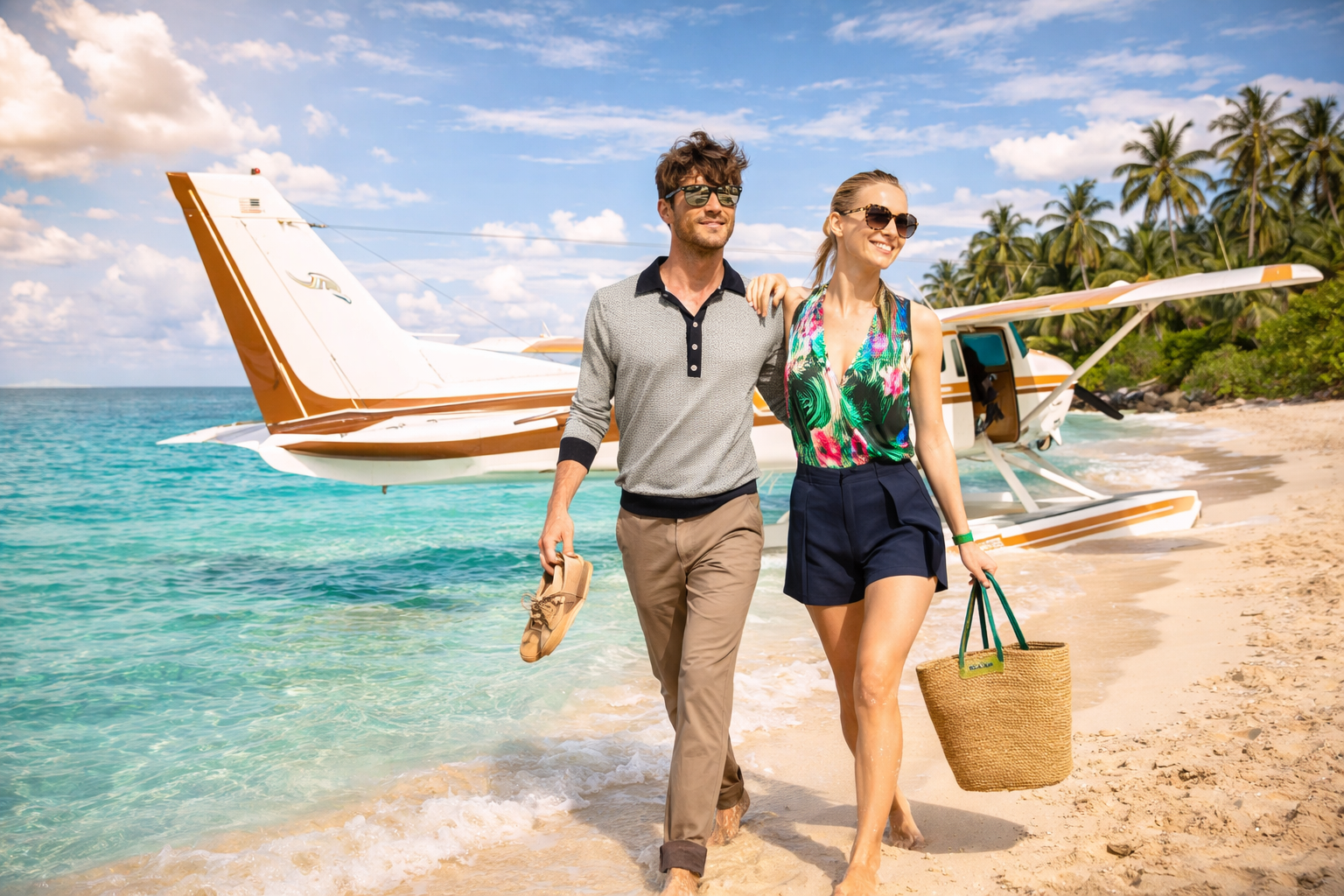
Who hasn’t dreamed of buying a private island? Imagine a place where you can escape the maddening crowd, step away from the hustle of everyday life, and glamorously step out of a seaplane onto your own stretch of sand while someone greets you with a chilled glass of Champagne. Sounds fabulous, right?
We’re all familiar with the well-known names who own private islands in the Bahamas — David Copperfield, Johnny Depp, Faith Hill and Tim McGraw, Tyler Perry, Eddie Murphy, Nicolas Cage. Beyond the celebrities, there are also high-net-worth individuals, from investors to politicians to entrepreneurs, who have quietly invested in private island ownership here.
These people are drawn to private island ownership for the sheer fact that they want exactly what a private island offers: privacy. The ability to create a completely secluded environment, far removed from crowds, schedules, and outside noise. And of course, telling people you own an island has a nice ring to it, doesn’t it?
So the real question is: do you have to be ultra-wealthy to buy a private island?
The answer is: it depends.
If your vision includes arriving by seaplane, fully staffed service, private chefs, caretakers, boat captains, watersports operators, and a full hospitality operation, then yes, you’d be better off with millions (or even billions) in spare change to throw at the project.
But that’s not the only path to private island ownership. In this guide, I’m going to share some personal insight based on our experience with remote and private island development. My goal is to give you a realistic understanding of what’s involved, not just the purchase price, but the financial and logistical realities, so you can decide whether owning a private island is actually within reach for you.
There are a few articles floating around the internet that say buying a private island can cost roughly the same as a London flat, and yes, that part is true, but what about the costs of building and maintaining an island? That’s where island ownership vs. urban living differs a great deal.
Consider your budget
It’s one thing to purchase property, but developing a private island in the Bahamas is a whole other can of worms. Mark and I have spent years working in the Out Islands, project managing construction and renovations in remote locations. Over that time, we’ve seen firsthand how quickly costs can escalate once you move beyond the purchase price.
On one private island project in the Exumas, a renovation of three guest cottages reached approximately $8 million. The service yard, which included staff housing, operational buildings, power generation, water systems, and marine facilities, cost $55 million. We also oversaw the construction of a fairly simple beach bar on another private island, which cost the owner $3 million.
It doesn’t have to be that expensive, however. There are a lot of factors at play, including how simple or how extravagant you’d like to build. We have friends who built a home on a remote island that operates like a boat. It’s a modest home with a few solar panels and a rainwater collection cistern, and instead of having caretakers and gardeners, they do the maintenance themselves and have planted native species around the property that can survive without extra watering.
The key is planning. If you bring in the right people from the beginning and get proper cost estimates before you even start, you can plan for something that fits within your budget.
Consider the location
There are a lot of islands for sale in the Bahamas. It’s an archipelago of 700 islands. Some islands are close to towns, airstrips, and amenities. Some are far from anything.
The Exumas are one of the most sought-after regions for private island ownership in the Bahamas, largely because they offer a sense of seclusion without complete isolation. In many areas, you can feel completely removed from the world, yet still reach a marina, restaurant, or settlement within 20–30 minutes by boat, and Nassau is relatively accessible. Because of this, private islands in the Exumas tend to be more expensive.
By contrast, if you’re looking at more affordable private islands in places like San Salvador or Inagua, you’re often stepping into a much higher level of remoteness. It’s going to be a remote island off a remote island. That changes everything in terms of logistics, cost, and lifestyle, so you’ll have to consider how far off the beaten path you are willing to go.
Consider the lifestyle
Equally important is understanding your own personality, and that of your family or guests. Do you genuinely enjoy peace and solitude? Or do you prefer having access to activity, dining, and social life?
Places like Harbour Island and Hope Town are popular for a reason. The islands offer restaurants, bars, shops, and water activities, all within a short golf cart ride. That balance makes them appealing for families and frequent visitors.
Private island living is different. Unless you truly enjoy being removed from it all, the reality of isolation can set in more quickly than expected. Perhaps you can convince your friends and family to join you for your own private beach party every time you visit. If so, that’s fantastic. But you’ll have to consider additional guest accommodations and infrastructure to support that.
Vacant land vs turnkey islands
The cheapest way to enter the private island market is to buy vacant land, but if you can afford it, a turnkey island already in operation may be the better way to go. Choosing to buy undeveloped land will all depend on your enthusiasm, level of patience, and the team you choose to help you with the development process.
Another consideration when buying a private island in the Bahamas is whether to purchase vacant land or a fully developed, turnkey property.
In general, undeveloped islands represent the lowest entry point into the market. But they also require the greatest investment in time, planning, and development. A turnkey island, while more expensive upfront, can offer immediate usability and a clearer understanding of operating costs.
If you choose to buy undeveloped land, success will depend heavily on three things:
Your level of patience
Your tolerance for complexity
The team you bring in to guide the development process
I would recommend discussing your plan with a consultant who is well-versed in building in the Bahamas before you purchase property. You can reach out to PanCaribbean Consulting Group to get you started in the right direction.
Infrastructure and operations
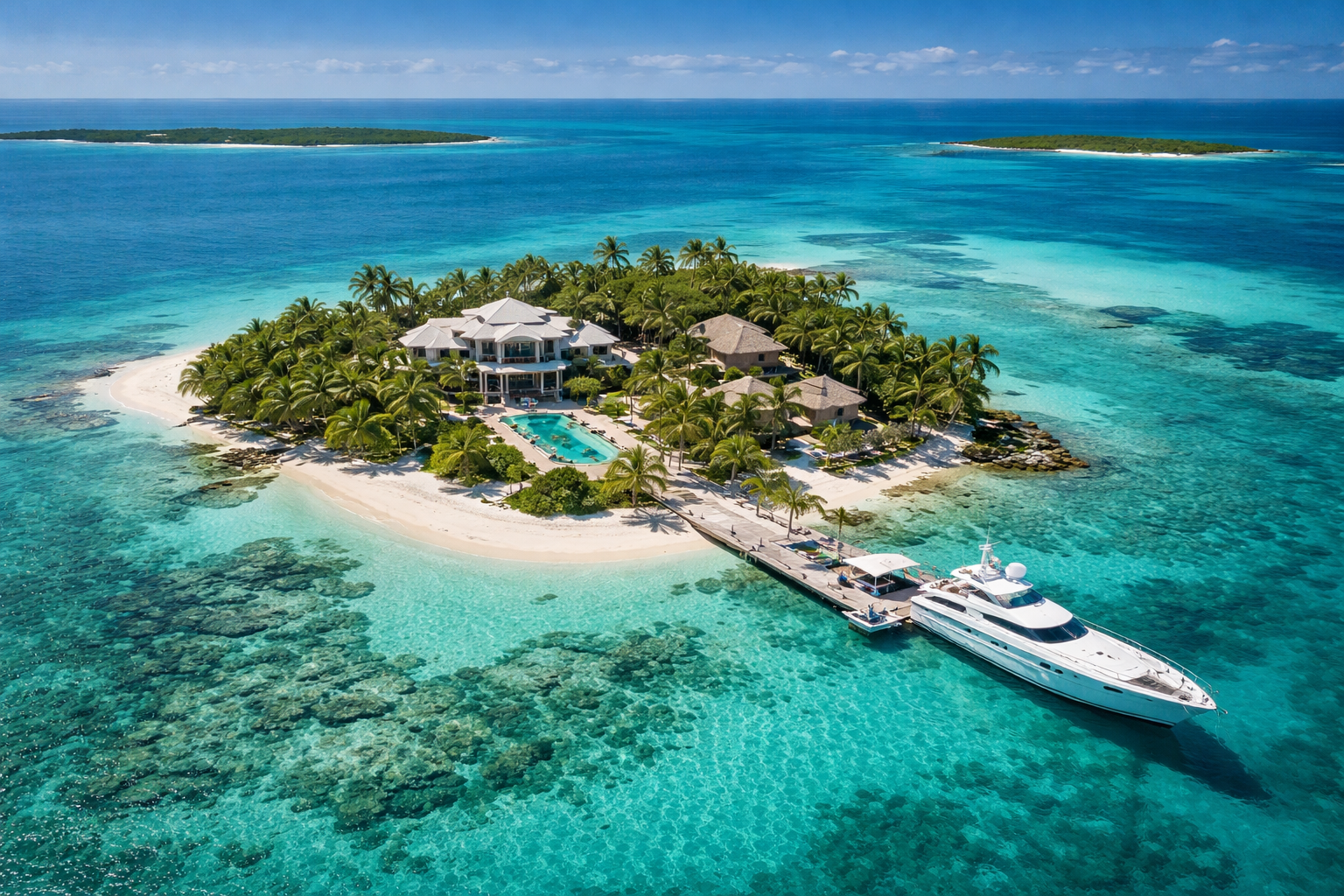
Once you move beyond the purchase, the next step is thinking about the level of infrastructure and amenities you’ll need. Most private islands in the Bahamas are within range of cellular service, and internet is typically handled via satellite systems such as Starlink. Beyond that, however, everything must be created from scratch. You will need to generate your own electricity (solar power or mechanical generator) and provide your own fresh water (reverse osmosis systems and/or rainwater collection).
Other considerations are:
Is there a nearby settlement where workers can commute from daily?
Or will you need to house your construction team on-site?
If so, how will you provide lodging, food, laundry, and transportation during their rotations?
How will materials, fuel, and equipment be delivered to the island?
There is no Home Depot around the corner, so logistics are a major piece of the puzzle when developing a private island in the Bahamas.
Once construction is complete, who is going to look after the island? It’s not a great idea to leave a private island unattended for security reasons, not to mention that in a marine environment, the systems will need regular maintenance. Because the last thing you want is to step onto your island, ready to relax, only to find that the generator isn’t working or the water system is down. This is why many owners choose to have caretakers or staff in place, even for relatively simple setups.
So what will it actually cost?
And now for the actual cost of island ownership. At the time I am writing this, entry-level private islands for sale in the Bahamas are in the range of $3 million and up. For the purpose of this guide, we’ll use that as a starting point and build out general cost estimates based on our experience working on remote island construction and development projects.
The needs and wants of an island owner vary greatly, whether you’re building a fully staffed luxury retreat or a simpler, self-sufficient property. Costs can scale significantly in either direction, and of course, on the upper end, the sky is the limit.
The goal here is not to give exact numbers, but to provide a realistic framework so you can better understand what private island ownership actually involves.
The price per square foot is based on all aspects of shipping construction materials, customs, duty, and labor, so for decent hurricane-rated structures, this is going to be fairly competitive. If you’d like a more comprehensive cost breakdown, please visit our partners at PanCaribbean Consulting Group.
INITIAL COSTS
Purchase price – $3m
Legal fees – 1 to 2%
Stamp tax 2.5% (buyer pays half)
VAT 7.5% (buyer pays half)
TOTAL INITIAL COSTS: $3,180,000 to $3,210,000
DEVELOPMENT COSTS
Architect/engineers (design team) – $300,000
2000 sqft villa @ $1000/sqft – $2,000,000
1000 sqft caretaker/utility building @ $500sqft – $500,000
Generator/electrical & fuel storage infrastructure – $100,000
Watermaker water storage and distribution – $100,000
Satellite/communication infrastructure – $20,000
Boat – $100,000
50′ dock – $250,000
TOTAL CONSTRUCTION COSTS: $3,750,000
ONGOING COSTS (YEARLY)
Caretaker – $100,000 to $250,000
Additional staff (gardener/landscaping, maintenance staff)- $20,000 to $100,000
Fuel – $25,000 to $50,000
Boat maintenance – $60,000
Facilities maintenance – $50,000
Real property tax (1% of determined value of land + development) – $60,000
TOTAL ONGOING COSTS (YEARLY): $400,000
If you consider all this, buying an island may not seem quite so on par with that London flat and the standard utilities that go along with it. For many, however, this is still obtainable, and as long as you are armed with the information before you go blasting into it, you’ll be stepping out of that seaplane onto your private beach before you know it.